Hotline
+86-136 8495 9862
Email:cennia@szmizhi.com
Add::104,Building 27,Third Industrial Zone, Longxi Community,Longgang District,Shenzhen,China.
Coil Forming & Handling Equipment
Surface Treatment Equipment
Solutions
Application
About Us

Welcome to MIZHI
For consultation/feedback, please call the service hotline: +86-136 8495 9862 Email:cennia@szmizhi.com

Coil Forming & Coil Handling Solutions
Surface Treatment Solutions


Our company is well received by customers with perfect solutions, good product quality, performance, and after-sales
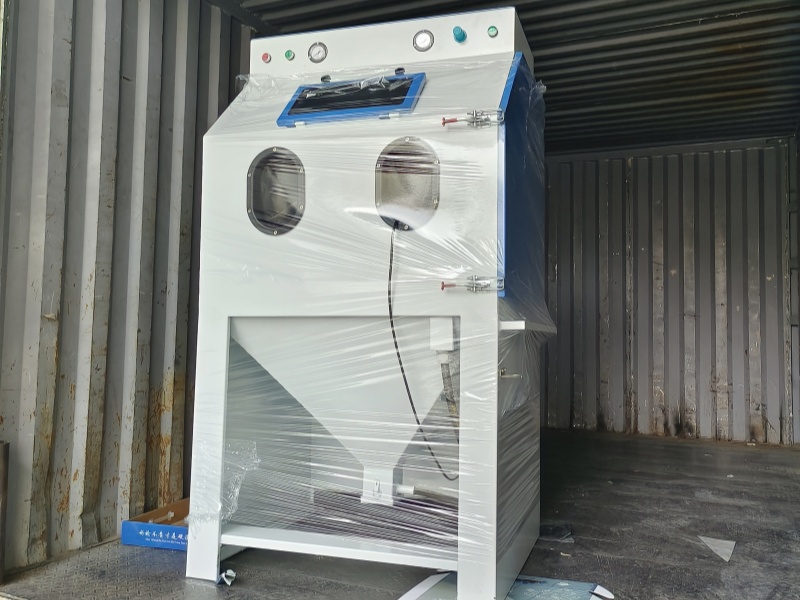
A sand blasting machine, also commonly referred to as a sandblaster, is a piece of equipment designed to propel abrasive materials at high speeds onto a surface for various purposes. This process, known as sandblasting or abrasive blasting, has been widely used in numerous industries for decades due to its effectiveness in surface preparation and finishing. The fundamental principle behind a sand blasting machine is relatively simple: using a source of compressed air or a centrifugal wheel to accelerate abrasive particles, which then strike the target surface with sufficient force to remove contaminants, paint, rust, or to create a specific surface texture.
The history of sand blasting can be traced back to the late 19th century when inventors began experimenting with ways to use compressed air to propel abrasives. In 1870, Benjamin Chew Tilghman patented the first sand blasting process, which initially used sand as the abrasive material, hence the name. Over time, the technology has evolved significantly, with advancements in equipment design, abrasive materials, and safety features. Today, sand blasting machines come in various types and configurations, catering to a wide range of applications from small-scale DIY projects to large industrial operations.
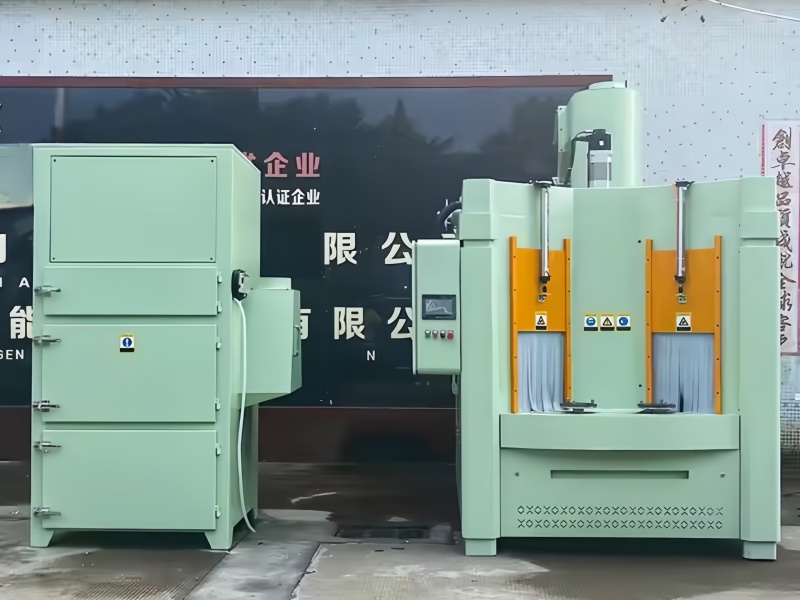
In 2025, sand blasting machines continue to play a pivotal role in various industries, serving as essential tools for surface treatment processes. These machines have evolved significantly over the years, incorporating advanced technologies to enhance performance, efficiency, and environmental friendliness. This article aims to provide an in - depth exploration of the 2025 sand blasting machines, covering their working principles, different types, applications, technological advancements, and market trends.
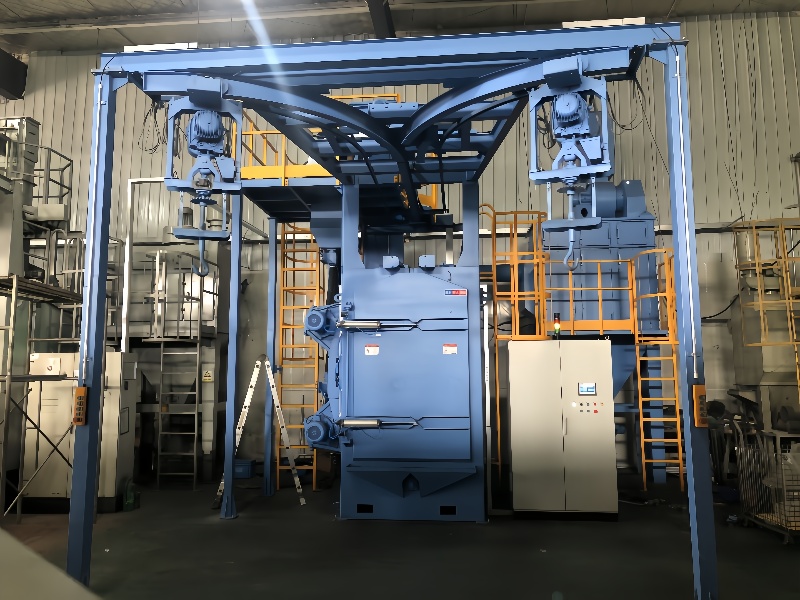
A shot peening machine system is a complex integration of mechanical, electrical, and material processing components designed to induce compressive residual stresses on workpiece surfaces. Unlike standalone machines, these systems emphasize modularity, automation, and process consistency across industrial scales. The technology traces its roots to post-WWII aerospace needs, evolving from manual blasting to fully automated production lines that handle millions of parts annually.
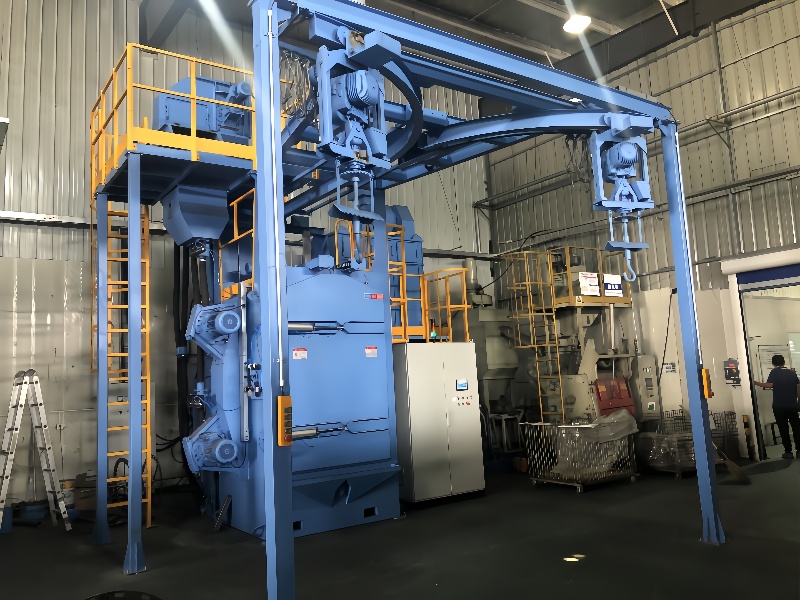
Shot peening machine equipment serves as the backbone of a critical manufacturing process that enhances material durability by inducing compressive residual stresses. These systems range from simple manual setups to complex automated installations, all designed to propel spherical shot particles at high velocity onto component surfaces. The equipment’s design directly influences the quality of peening, affecting parameters like stress depth, coverage uniformity, and surface finish.
Since the mid-20th century, shot peening equipment has evolved alongside industrial demands. Early pneumatic systems gave way to centrifugal wheel machines in the 1960s, followed by CNC-integrated systems in the 1980s. Today, modern equipment incorporates advanced sensors, robotic arms, and AI-driven controls to achieve precision unattainable by legacy systems. This overview dissects the core components, operational systems, maintenance protocols, and technological trends of shot peening machinery, providing a comprehensive guide to these indispensable industrial tools.
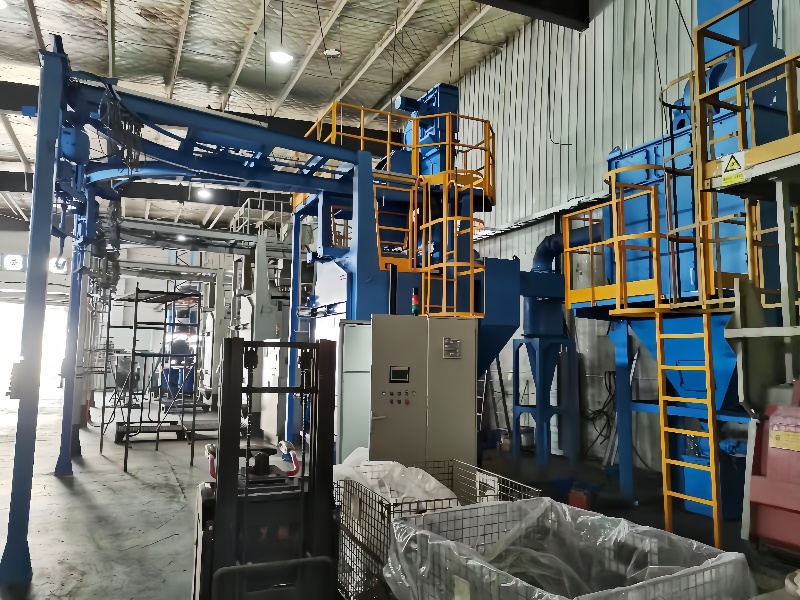
A portable shot peening machine is a mobile, lightweight surface treatment system designed for on-site applications where traditional fixed equipment is impractical. Unlike industrial-scale systems, these machines prioritize mobility, ease of operation, and quick setup, enabling peening in remote locations, large structures, or hard-to-transport components. The technology emerged in the late 20th century in response to maintenance demands in aerospace, civil engineering, and heavy industry, where transporting components to a fixed peening facility was costly or impossible.
The CNC (Computer Numerical Control) shot peening machine represents the pinnacle of surface enhancement technology, fusing the precision of computer controlled machining with the material strengthening capabilities of shot peening. Unlike traditional shot peening systems, CNC enabled machines offer sub millimeter accuracy in trajectory control, repeatable process parameters, and automated workflow management. This integration has revolutionized industries where consistency and traceability are critical, such as aerospace, medical devices, and high performance automotive components.
Since the first CNC shot peening systems emerged in the 1980s, driven by aerospace demands for uniform stress induction, the technology has evolved to incorporate multi axis motion, real time process monitoring, and advanced software algorithms. Today, a CNC shot peening machine can peen complex geometries—from turbine blades with intricate airfoils to miniature medical implants—with unmatched precision, ensuring that each component receives identical treatment. This overview explores the technical foundations, system architecture, industrial applications, and future trends of CNC shot peening, highlighting its role in modern precision manufacturing.
Defining Robotic Shot Peening Machines: Concept and Evolution
A robotic shot peening machine integrates industrial robotics with traditional shot peening technology, enabling automated, precise, and repeatable surface treatment of complex components. Unlike conventional systems, these machines utilize robotic arms to control shot propulsion nozzles or centrifugal wheels, allowing 3D manipulation and targeted peening on intricate geometries. The technology emerged in the late 1990s as aerospace and automotive industries demanded higher precision and consistency in fatigue life enhancement.
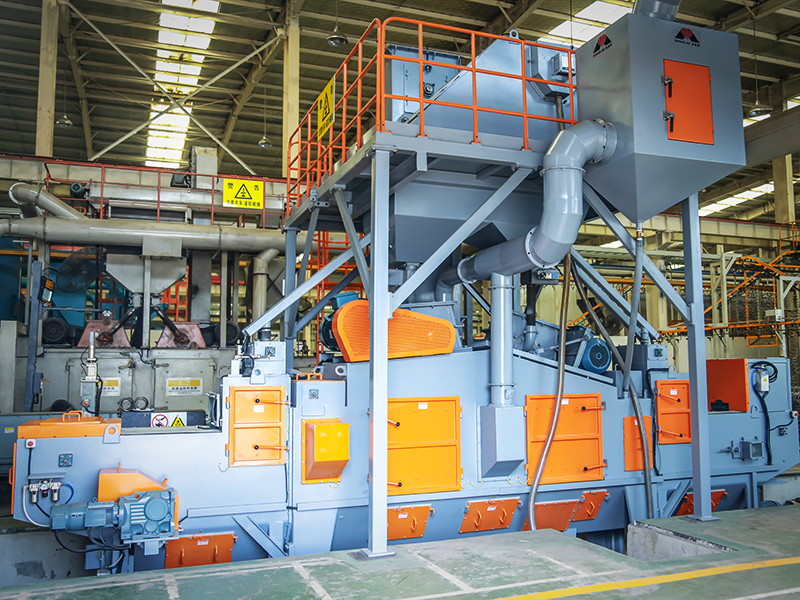
Shot peening is a transformative surface treatment process that has revolutionized modern manufacturing by improving material durability, fatigue resistance, and structural integrity. At its core, a shot peening machine propels small spherical particles—known as "shot"—onto a component’s surface at high velocity, inducing compressive residual stresses that counteract tensile forces responsible for crack initiation and propagation. This technique, dating back to the early 20th century, has evolved from rudimentary manual systems to highly automated, precision-engineered machines, becoming indispensable across aerospace, automotive, medical, and energy sectors.
The significance of shot peening lies in its ability to extend component lifespan without compromising design or functionality. For instance, a turbine blade in an aircraft engine subjected to cyclic thermal and mechanical loads can see its fatigue life doubled or tripled through shot peening. This overview delves into the technology’s fundamentals, machine classifications, industrial applications, market trends, and future innovations, underscoring its role as a cornerstone of modern material science.

sign up newsletter
Email:cennia@szmizhi.com
Add::104,Building 27,Third Industrial Zone, Longxi Community,Longgang District,Shenzhen,China.