Hotline
+86-136 8495 9862
Email:cennia@szmizhi.com
Add::104,Building 27,Third Industrial Zone, Longxi Community,Longgang District,Shenzhen,China.
Coil Forming & Handling Equipment
Surface Treatment Equipment
Solutions
Application
About Us

Welcome to MIZHI
For consultation/feedback, please call the service hotline: +86-136 8495 9862 Email:cennia@szmizhi.com

Coil Forming & Coil Handling Solutions
Surface Treatment Solutions


Our company is well received by customers with perfect solutions, good product quality, performance, and after-sales
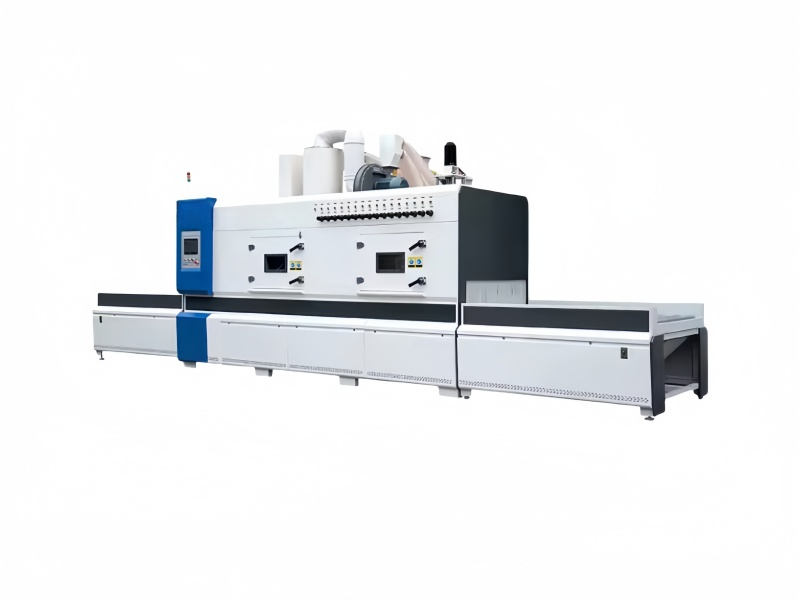
In modern industrial manufacturing, surface treatment of steel plates, pipes, and structural components is critical for ensuring durability, corrosion resistance, and coating adhesion. Roller conveyor sand blasting machines have emerged as a cornerstone of automated surface preparation, combining the efficiency of roller conveyors with the power of sandblasting to clean and profile large-scale workpieces. This article provides an in-depth analysis of roller conveyor sand blasting machines, covering their design, working principles, key components, applications, advantages, and future technological trends, highlighting their role in enhancing productivity and quality across industries.

High Pressure sand blasting machines represent the pinnacle of abrasive blasting technology, designed to tackle the most demanding surface treatment tasks with unmatched efficiency. Unlike standard blasting systems, these machines operate at significantly higher air pressures (typically 100–300 PSI or more), propelling abrasive media at velocities exceeding 150 m/s. This extreme force enables them to remove stubborn contaminants, such as heavy rust, thick paint coatings, mill scale, and even concrete residues, from robust substrates like steel structures, ship hulls, and industrial equipment. This comprehensive guide explores the mechanics, components, applications, technological advancements, and safety considerations of High Pressure sand blasting machines, highlighting their role in modern heavy-duty industries.
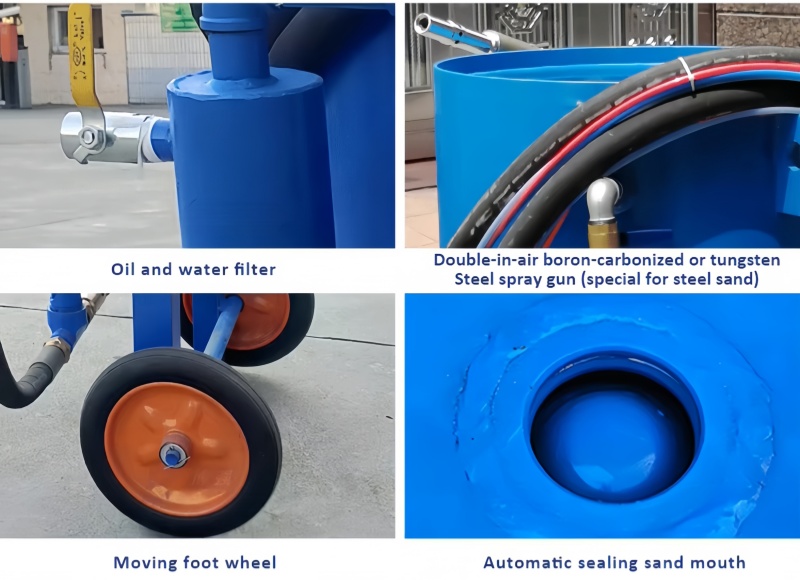
A portable sandblaster tank is a compact, mobile surface treatment device designed to propel abrasive materials (such as sand, glass beads, or steel shot) at high velocity to clean, etch, or prepare surfaces. Unlike industrial scale sandblasting systems, portable tanks prioritize mobility, ease of use, and versatility, making them ideal for on site projects, small workshops, automotive repairs, and DIY applications. This article explores the design principles, key components, operational mechanisms, and diverse applications of portable sandblaster tanks, along with their technological advancements and future prospects.
High Pressure sand blasting machines represent the pinnacle of abrasive blasting technology, designed to tackle the most demanding surface treatment tasks with unmatched efficiency. Unlike standard blasting systems, these machines operate at significantly higher air pressures (typically 100–300 PSI or more), propelling abrasive media at velocities exceeding 150 m/s. This extreme force enables them to remove stubborn contaminants, such as heavy rust, thick paint coatings, mill scale, and even concrete residues, from robust substrates like steel structures, ship hulls, and industrial equipment. This comprehensive guide explores the mechanics, components, applications, technological advancements, and safety considerations of High Pressure sand blasting machines, highlighting their role in modern heavy-duty industries.
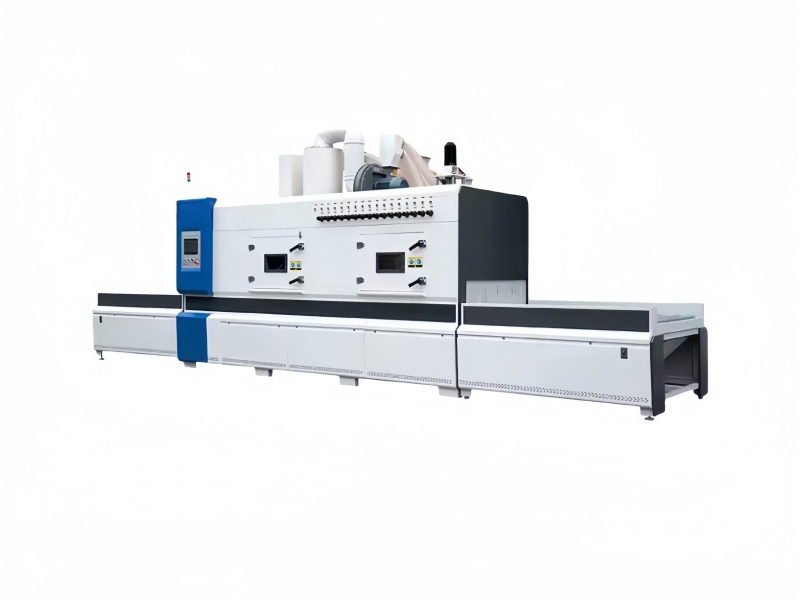
In modern industrial manufacturing, surface treatment of steel plates, pipes, and structural components is critical for ensuring durability, corrosion resistance, and coating adhesion. Roller conveyor sand blasting machines have emerged as a cornerstone of automated surface preparation, combining the efficiency of roller conveyors with the power of sandblasting to clean and profile large-scale workpieces. This article provides an in-depth analysis of roller conveyor sand blasting machines, covering their design, working principles, key components, applications, advantages, and future technological trends, highlighting their role in enhancing productivity and quality across industries.
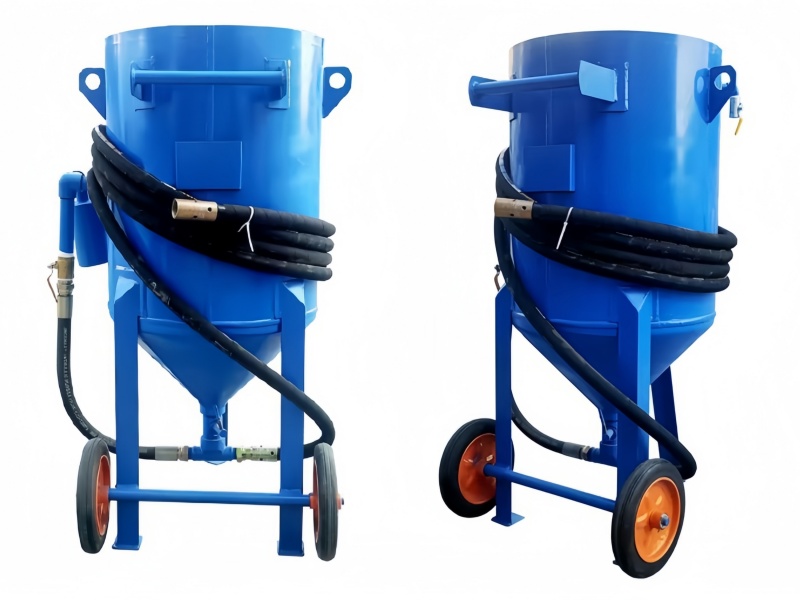
A portable sandblaster tank, often referred to as a mobile sandblasting unit, is a compact and lightweight surface treatment solution designed for on site operations, remote projects, or environments where traditional stationary sandblasting equipment is impractical. Unlike industrial scale sandblasting systems, portable tanks prioritize mobility, ease of use, and versatility, making them indispensable in sectors such as automotive repair, construction, marine maintenance, and small scale fabrication. This document explores the design principles, key components, operational mechanics, application scenarios, and future trends of portable sandblaster tanks, highlighting their role in modern surface preparation.
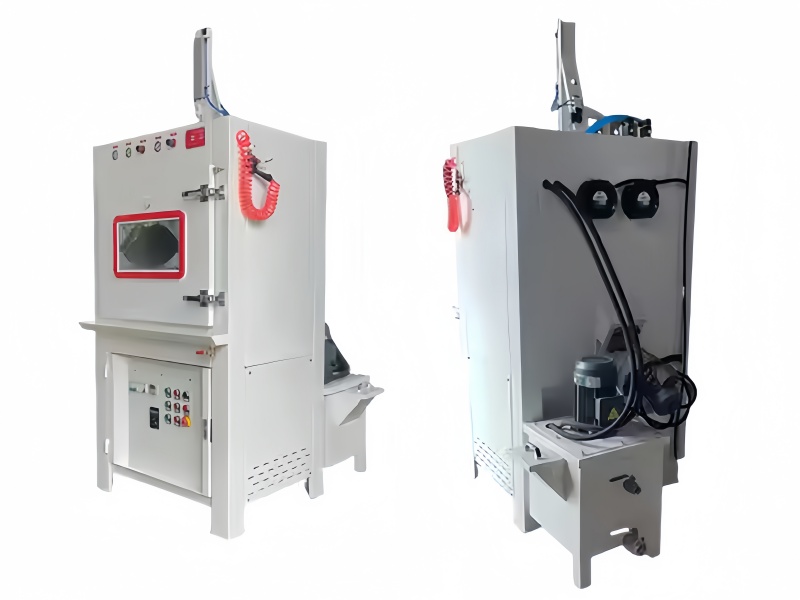
Sandblasting is a widely used surface treatment process in industries such as manufacturing, construction, automotive, and aerospace. Traditional dry sandblasting, while effective, generates significant dust, leading to health hazards, environmental pollution, and reduced visibility during operations. Wet sand blasting machines address these issues by introducing water into the blasting process, suppressing dust, minimizing abrasive consumption, and enhancing surface treatment quality. This article explores the technology, components, working principles, applications, and environmental benefits of wet sand blasting machines, highlighting their growing importance in modern industrial processes.
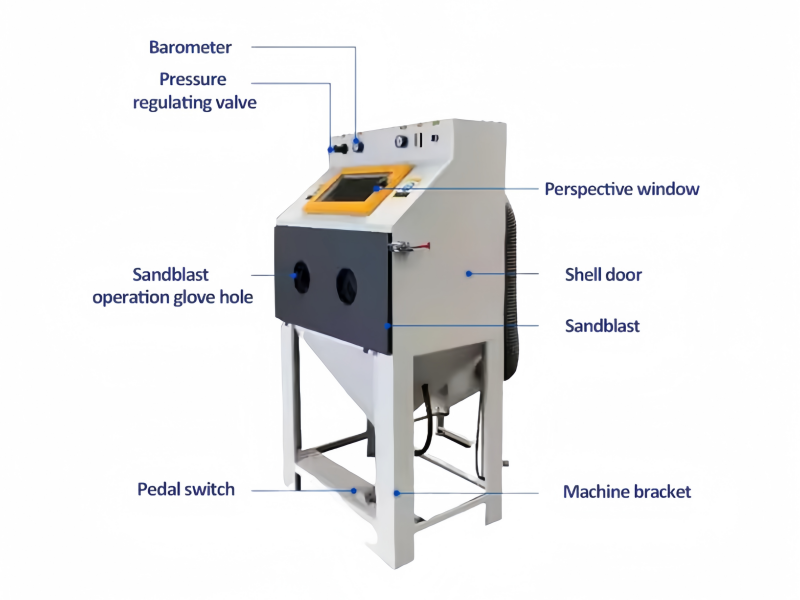
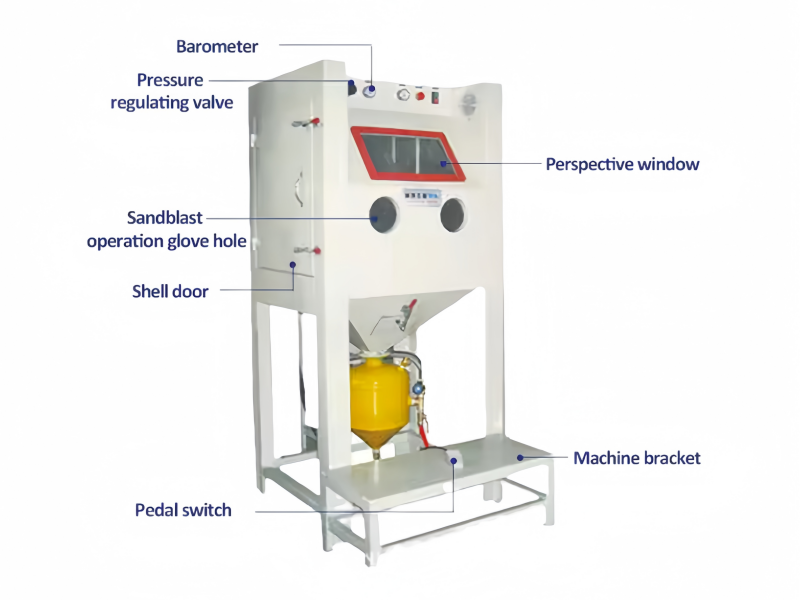
A sand blasting cabinet, also known as a blast cabinet or abrasive blasting cabinet, is a specialized enclosed workstation designed to clean, etch, or texture small to medium-sized workpieces using high-velocity abrasive media. Unlike open-air blasting systems, cabinets contain the blasting process within a sealed chamber, minimizing dust dispersion and improving operator safety. These machines are widely used in industries such as automotive repair, metalworking, woodworking, and electronics for tasks ranging from rust removal to surface preparation for painting or coating. This article provides an in-depth analysis of sand blasting cabinets, covering their working principles, key components, applications, design considerations, safety protocols, and the latest technological innovations shaping their evolution.

sign up newsletter
Email:cennia@szmizhi.com
Add::104,Building 27,Third Industrial Zone, Longxi Community,Longgang District,Shenzhen,China.